
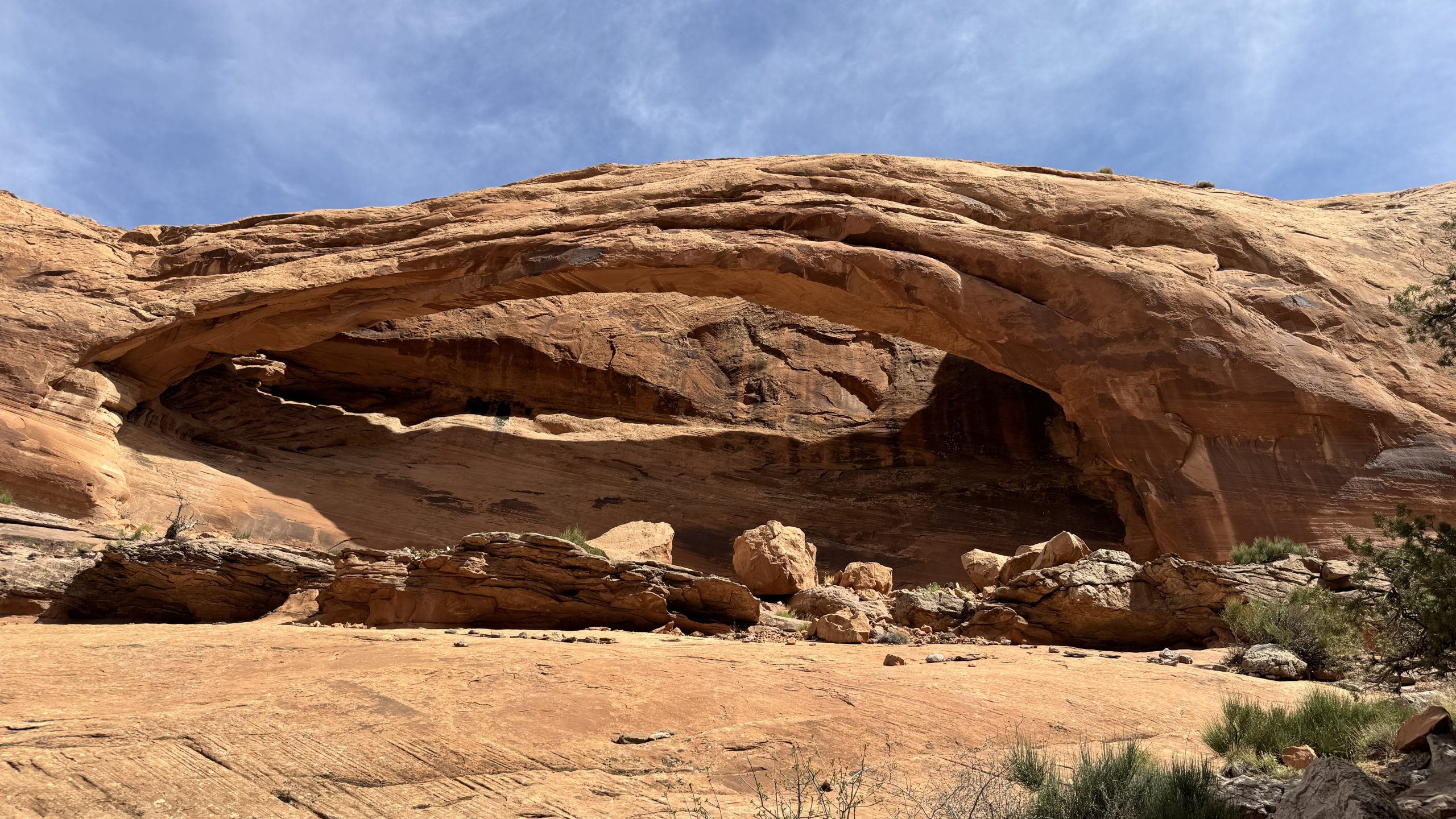

Longbow Arch is a moderate hike to a beautiful arch near Moab. This hike goes right past the Poison Spider Dinosaur Trackway, as well as some beautiful petroglyphs. This trail is moderate due to full-sun exposure as well as some narrow trails and rocky scrambles over tough terrain. Still, three rewards for one hike make this 2.5 mile hike well worth it. We really enjoyed the Longbow Arch Trail. (Note: some sites list this trail as 2.2 miles, but if you take the short detour to the petroglyphs as described, it totals 2.5 miles roundtrip.)
Where to find Longbow Arch
There is a large parking area for Longbow Arch and Poison Spider Dinosaur Trackway. This is also a popular jumping-off spot for an ATV trail, so you’ll see (and hear) them as they start along their trail. This parking area is along the Potash Road which is just north of Moab. Drive 6.0 miles down this road to the Poison Spider parking area. There is a sign directing you to drive up a steep gravel road to the parking lot.
Poison Spider Dino Tracks & Petroglphs Trail
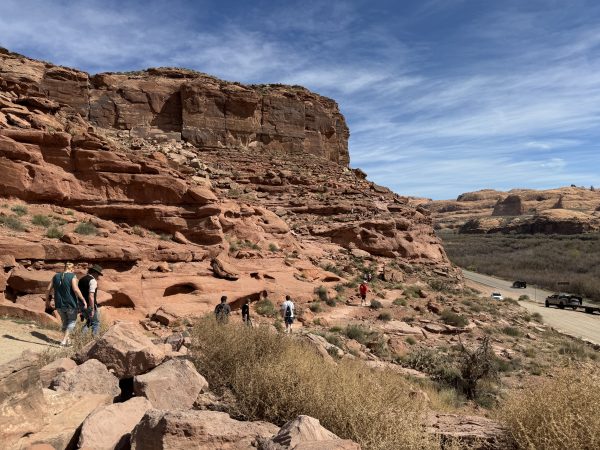
The trail to Longbow Arch in Moab heads straight up to the dinosaur trackway, which you can see from the parking lot. It is fairly steep, and a little bit treacherous, but we found it easy, even with a baby in a backpack many years ago. Just remember not to touch the rock that the tracks are on. You can take pictures from right below it, and the tracks stand out beautifully. You can read more about the dinosaur tracks and petroglyphs on our blog post about them.
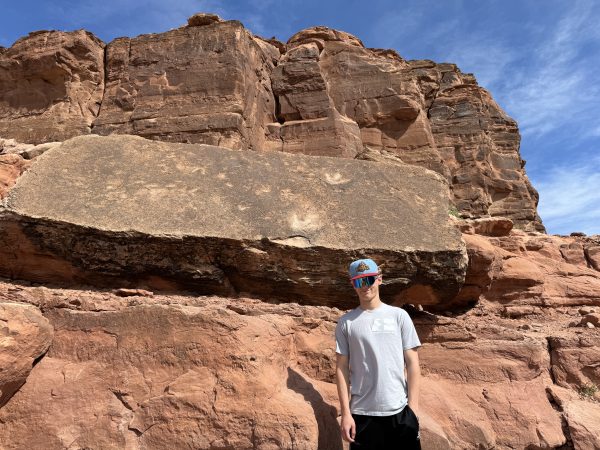
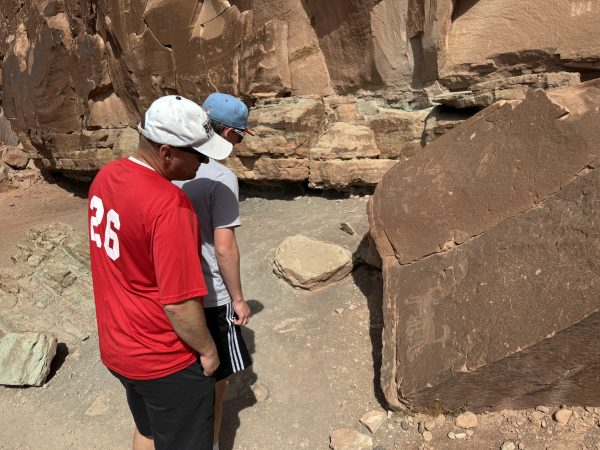
The trail gets a bit confusing when you climb to see the petroglyphs. You can go either right or left around the trackway. We went right and climbed to the narrow ridge that runs along the upper wall. The petroglyphs are on the upper wall. Make sure to stay back and take only pictures as you look. The petroglyphs run about 100 yards along this wall, and the array is quite impressive. They are really beautiful.
Longbow Arch Trail
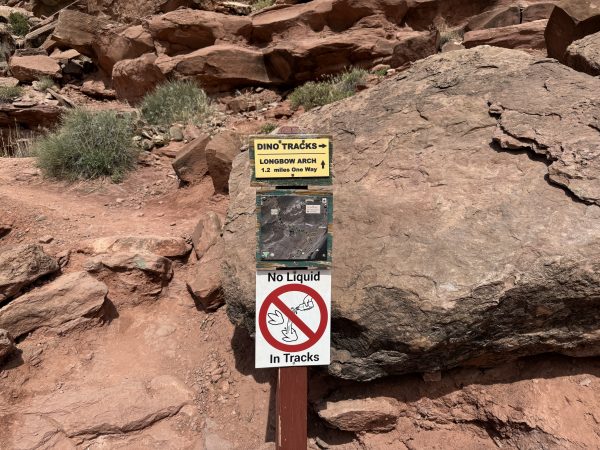
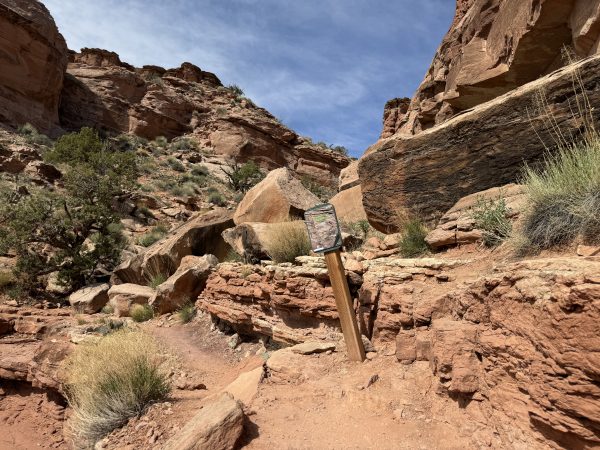
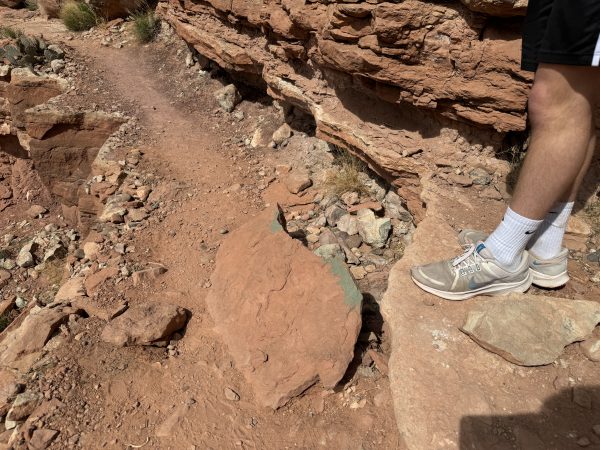
After checking out those two things, you could just head back to the car and call it a day. That would be fine, but Longbow Arch awaits. There is a sign showing where to begin the trail over to Longbow Arch. The trail has you work your way around to the left of the cliff face. Eventually, you come to a narrow gap and the trail goes up through that gap straight up the slick rock. There are metal stairs welded into the cliff to help you. You’ll also notice green paint tracks that mark the way. This is important, because later on, the trail goes over the slick rock with only the green footprints to mark the way.
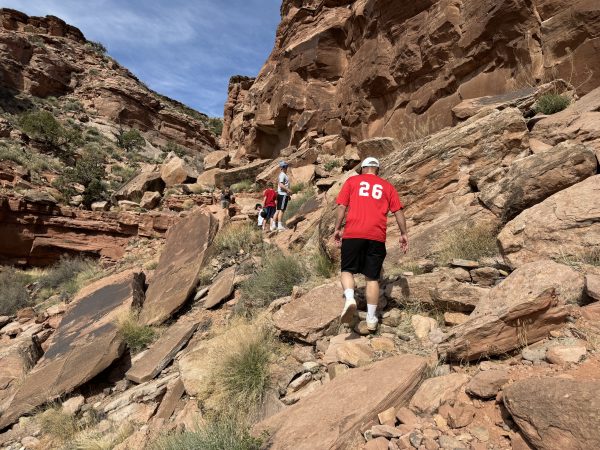
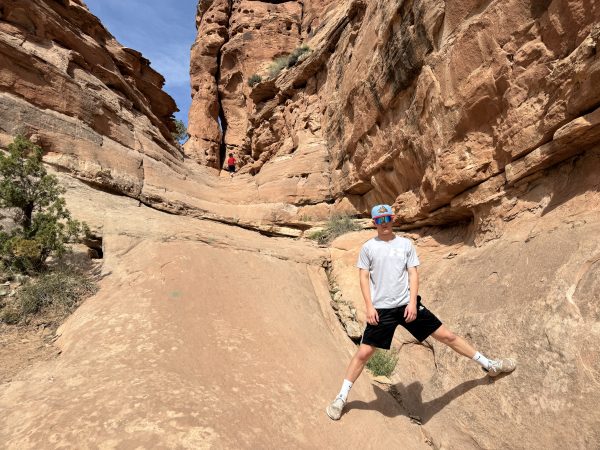
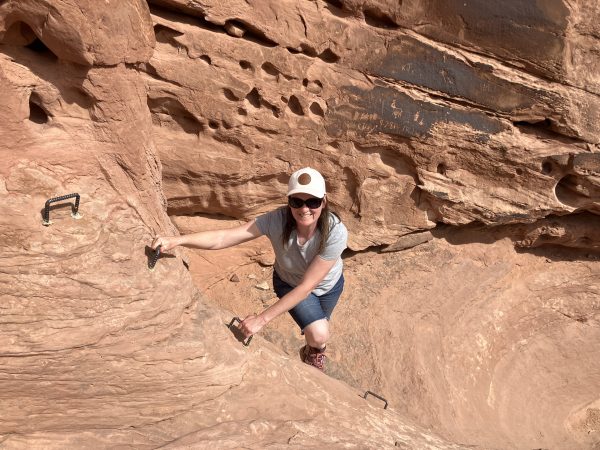
Eventually you come out on the relatively flat, slick rock summit of the hill. From here, it is just gently up and down to the foot of Longbow Arch. There is some walking through sand. There is very little shade as the trail traverses the top of the mesa, but you may find the occasional juniper to rest near to cool off. Most of the 1.25 miles to the arch are across this flat surface.
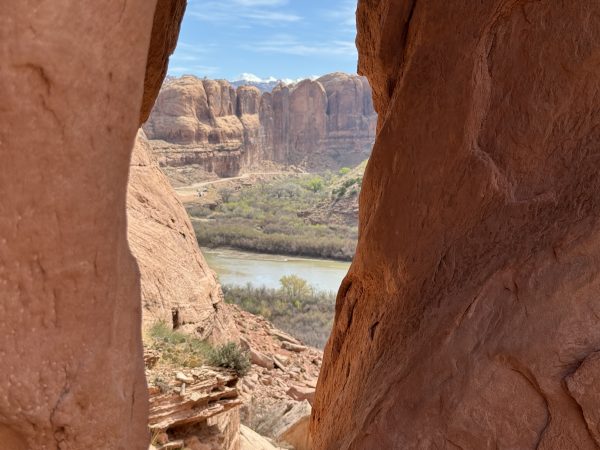
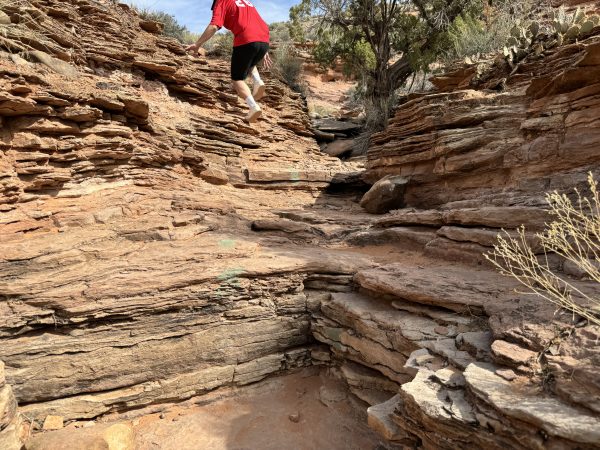
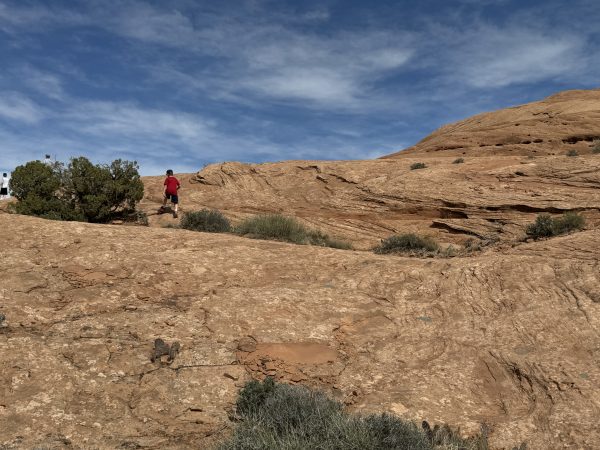
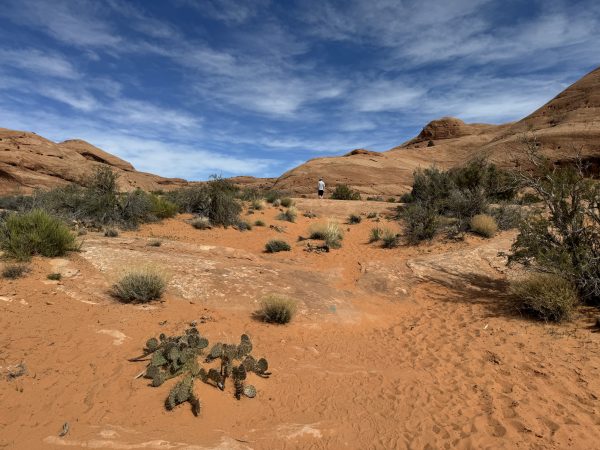
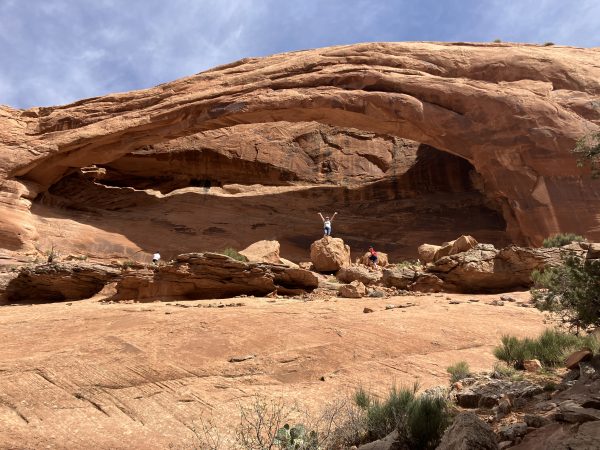
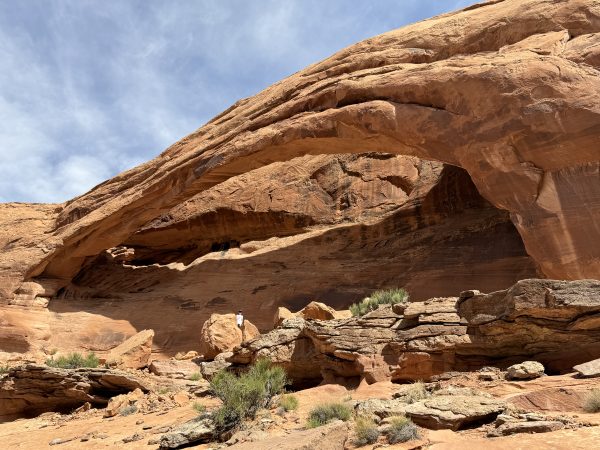
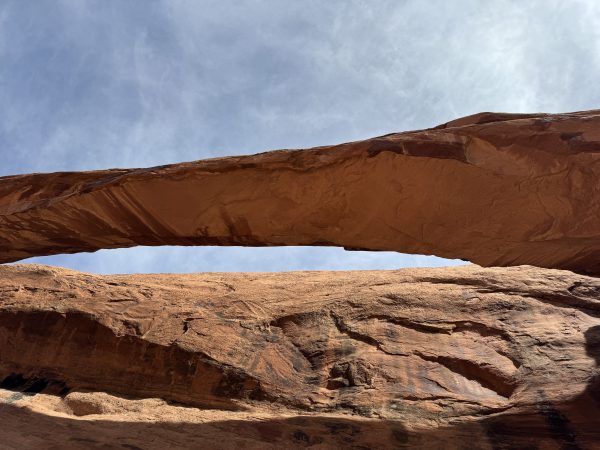
The trail finally turns to the right and the arch comes into view. Longbow Arch is rather large, and it is nestled up against the mountain, which makes it an alcove arch. This is a great place to take a few pictures and turn around. However, you can climb the last tenth of a mile into the arch. It is quite steep, but follow those green footprints into the narrow canyon. They take you up past the arch, and then you climb back into it. Once you are in the arch, you can’t see it quite as well, but this is where you finish the hike.
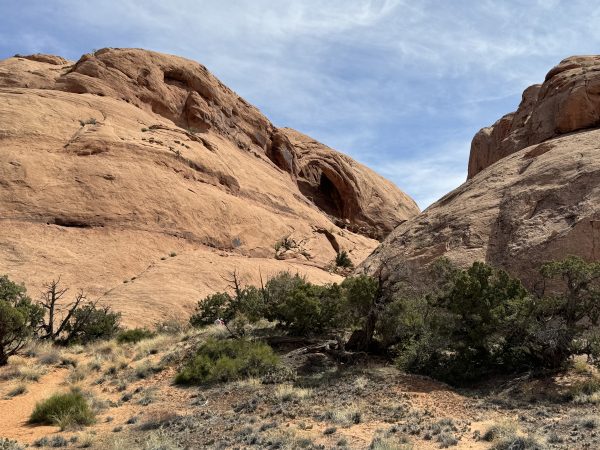
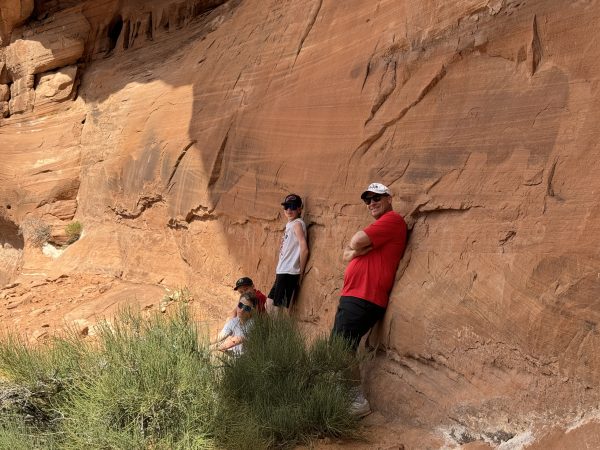
We only saw a few other people on the trail to Longbow Arch in Moab. There were many more who visited the Dino tracks and turned around, like we did on our first visit with toddlers. If you’re lucky, you may find solitude here on this trail. We would recommend hiking early or late in the day to avoid high heat since there is no shade. Take lots of water and wear a hat. We also recommend good hiking shoes with nice traction for climbing on the slick rock. Here are our favorite waterproof ones. If you are looking for more ideas of things to do in Moab, check out our post of family-friendly ideas in the Moab area.


