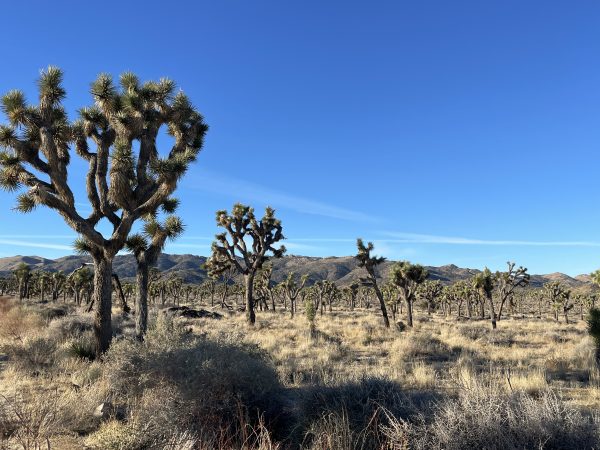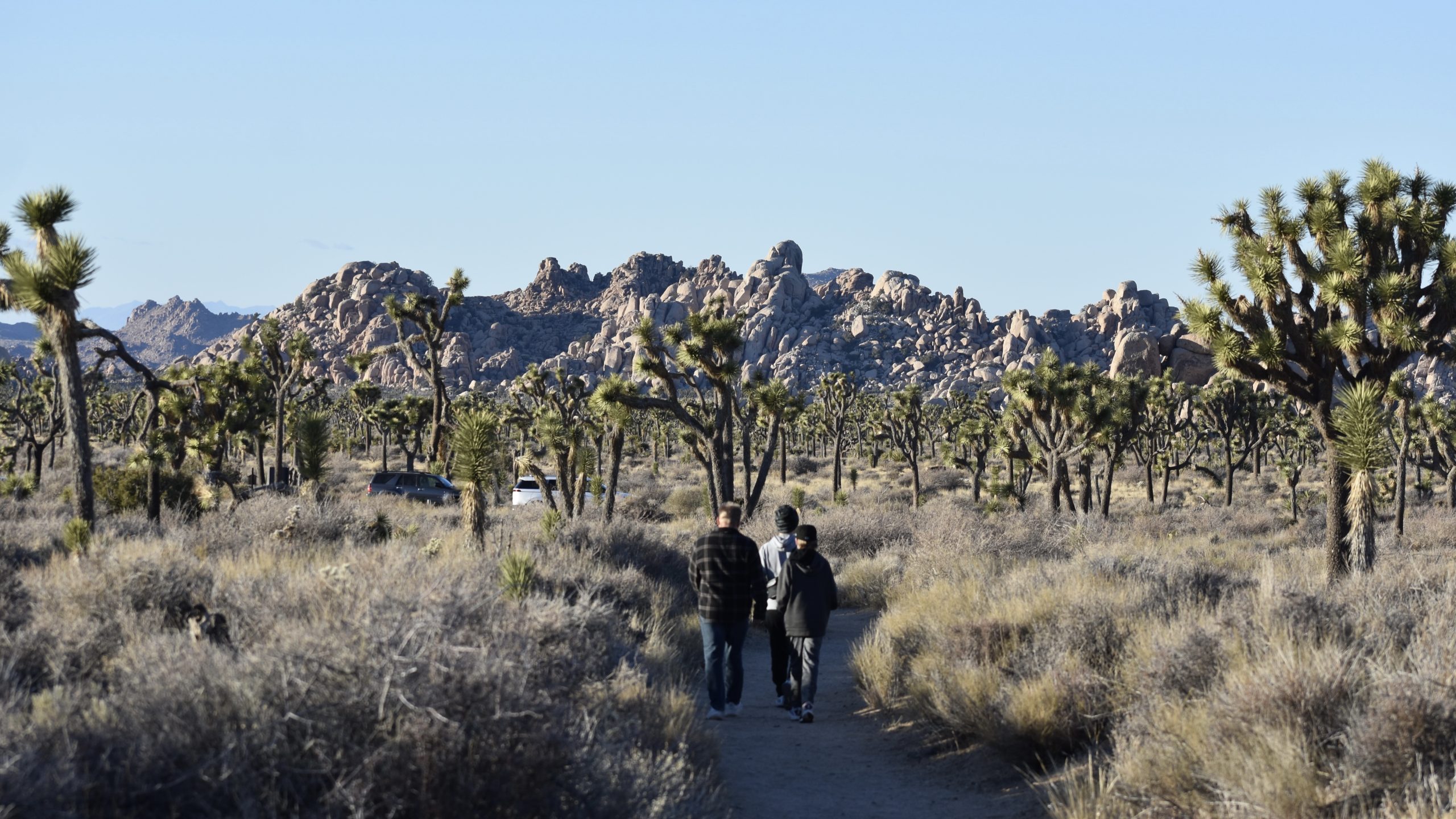

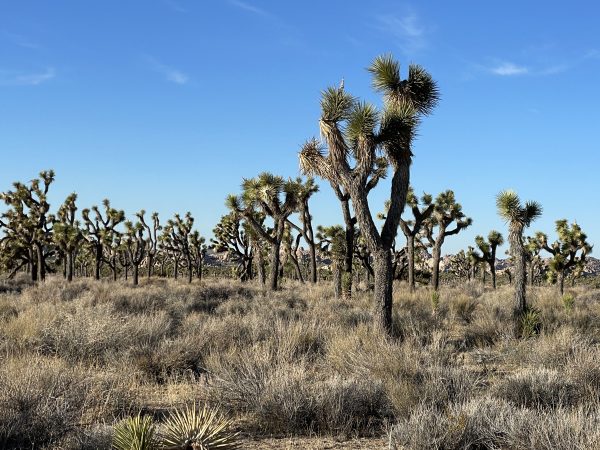
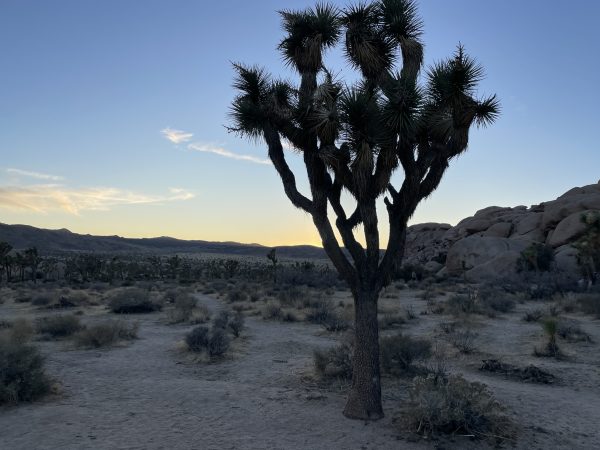
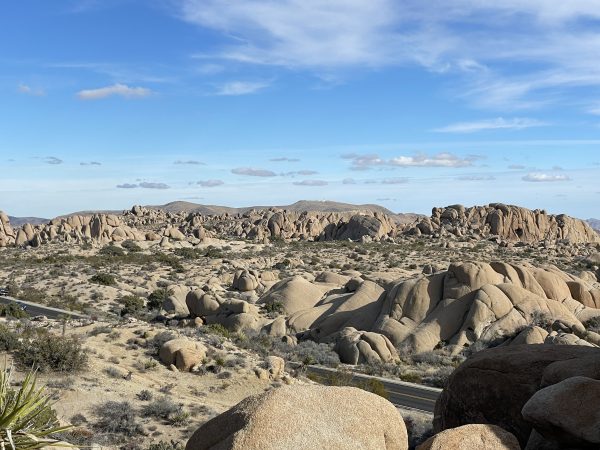
Joshua Tree National Park is really an amazing place. Though we have Joshua trees in Utah, they don’t grow in large concentrations, and they don’t get as tall as the ones in the park. There are also amazing rock formations that remind us of southern Utah parks like Zion and Arches. Best of all, there are tons of short hikes that are just right for families.
In order to do everything we wanted in Joshua Tree, we took a day and a half. That was plenty of time to do pretty much everything. We accessed the park from the northeast entrance at 29 Palms, California, which was right outside the entrance. This was a good spot because it is slightly less busy than the northwest entrance, but all the attractions are still within a short drive.
Lodging
Camping is the only lodging in Joshua Tree National Park. There are over 500 campsites throughout the park. Some are reservable and others are first come first served.
Reservable:
- Black Rock
- Cottonwood
- Indian Cove
- Jumbo Rocks
- Ryan
First Come First Served
- Hidden Valley
- Belle
- White Tank
Joshua Tree would be a great place to camp, especially in the Spring and Fall. For more information about these campgrounds, visit the national parks page.
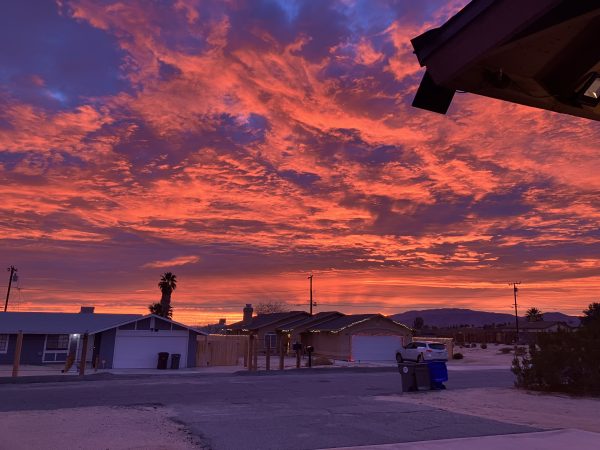
We stayed in Twentynine Palms and found it to be a wonderful spot for easy access to the park. Many people stay in the town of Joshua Tree, and some even stay in Palm Springs and drive over for the day.
Exploring the Park
The park has several different areas, which we grouped as South, North, and Central. There are just a few things in the North and South, and almost everything you’ll want to do will be in the Central area.
South Entrance
The South area, which includes the southeast entrance, has a small Visitor Center called Cottonwood Springs. There are two short hikes, Bajada Nature Trail, and Cottonwood Spring Nature Trail. If you have limited time, it is not worth the drive all the way down to the south end of the park, as there isn’t much to see along the way, and the speed limit of 35-45 makes it a very long drive.

Pinto Basin Road
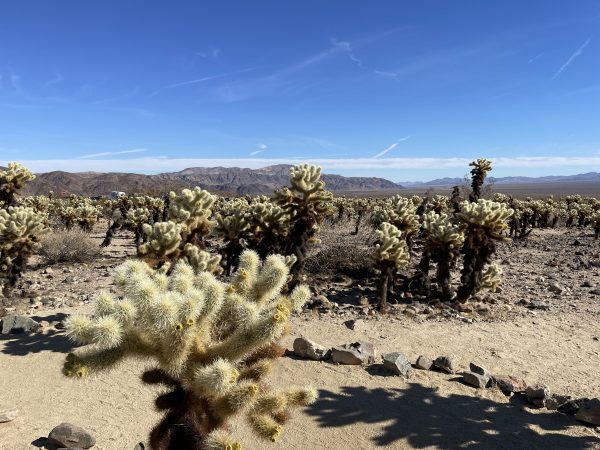
Part way down the south road, though, are two hikes you should do. The first is the Arch Trail to a rock arch. A little further down is the Cholla Cactus Garden where you can walk right through a field of cacti. Both of these are worth the drive from the main part of the park.
Main Part of Joshua Tree (Central)
The Central area has about 10 hikes that are worth your time. This area can be very busy, and parking lots are usually full and then closed on weekends by 9 or 10 am. We never had to wait for a parking space when visiting on New Years Day (a holiday), but we often slid into the last one available. And Keys View and Split Rock were both closed when we arrived in the afternoon. Luckily, we came back and visited both of these areas early the next morning.

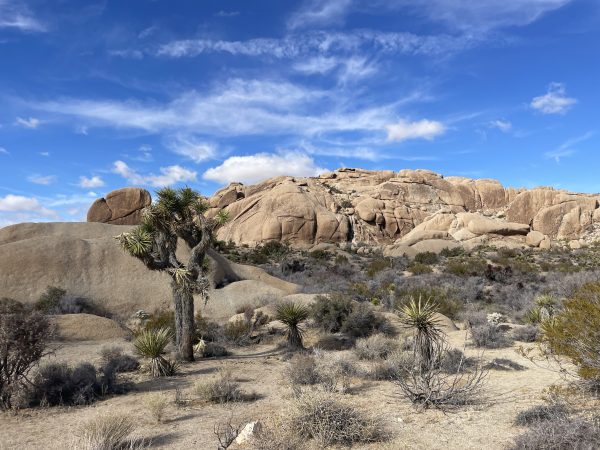
Make sure that you plan to stop at most of the roadside pullouts. There are plenty of places to scramble and play on the rocks. Though there are established trails that hikers need to stay on, there are many areas at these pullouts where you can climb, scramble, and explore.
Here are the stops and hikes that we recommend:
- Hidden Valley
- Barker Dam
- Keys View Overlook
- Cap Rock
- Ryan Ranch
- Hall of Horrors
- Skull Rock (just a pullout)
- Skull Rock Trail
- Split Rock Trail
For details on each of these hikes, visit our Family Friendly Hikes in Joshua Tree post. And if you’d like a printable list of all of these trails to help in your planning, enter your email below and it will pop up in your inbox.
Indian Cove
The North area is almost entirely unvisited except for campers. It’s easy to access, as it’s only a few miles in, though the road is rough. The area is called Indian Cove. There is only one small hike (Indian Cove Nature Trail), which means that you can leave it out if you don’t have time. We did enjoy seeing the rock formations in this part of the park, and we didn’t see one person on the trail.
Also in the northern part of Joshua Tree is the Oasis of Mara. This little nature trail is located at the old Visitor Center in Twentynine Palms. If you are a bird lover, you will want to stop here to see all the birds enjoying the oasis.

Stargazing
Joshua Tree is known for its dark skies. When we spoke to the ranger, he said anywhere in the park is great for stargazing. We had cloudy skies both of the nights we were there, but we can’t wait to visit again and check out the stars in this park. Make sure to plan time to go back in at night for stargazing.
Rock Climbing
Joshua Tree National Park is also known for rock climbing. We are not rock climbers, but we did see quite a few people with their gear. If you are a rock climber, check out this post on the Joshua Tree NP website about best places and best practices.
Tips for Visiting Joshua Tree National Park
There are a few tips that can help you plan your trip:
Carry water, wear a hat, and use sunscreen. The desert punishes those who aren’t prepared.
Second, parking can be a major problem on and around weekends. Be flexible in your planning, and try to get into the park as early as you can.
Third, wear good shoes for hiking and scrambling. Long pants help, too, if you slip or slide against the rocks. Most trails have some walking on rocks, so good hiking shoes are important.
Visit in a non-summer season. Temperatures in Joshua Tree can reach over 100 degrees in the summer. We visited in January and it was amazing. No snow, and we just wore sweatshirts and beanies if the wind was blowing.
Try to visit during the week. Holidays and weekends are busy, and with limited parking in some areas, it makes visiting Joshua Tree National Park a little tricky.
Bring your own food. There are no restaurants or food options inside of Joshua Tree, so pack a lunch before heading into the park.
We hope you enjoy Joshua Tree National Park as much as we did! It quickly climbed the list of our favorite national parks with so much to do. For current information, use the Joshua Tree National Parks website.