The Bean Museum at BYU is one of our favorite free adventures. We love walking through the museum and admiring all of the animal displays. This museum houses many “stuffed” animals, and also has some fun interactive spots for kids. Our favorite thing to do is to catch one of the live animal shows, and participate in a scavenger hunt.

Main Floor
As you enter the BYU Bean Museum, there is a welcome desk where you will need to pick up your parking permit. Everyone needs a parking pass to put in their vehicle, so don’t skip this part. And make sure you know your license plate number. There is a large display with African animals to view as you first enter the museum, and a large gift shop to shop in.

On the bottom floor, there are a few different areas to check out. There is a room filled with birds that we love. There is also a large section dedicated to the artwork of Boyd K. Packer, which also includes many carvings of birds. The insects section has some fun exhibits that our boys love, such as how a mosquitoes mouth works. Also, on the bottom floor, you can see the ocean animals and the rest of the African animals. Shasta, a liger from the Hogle Zoo, is on display here, so make sure to find her.
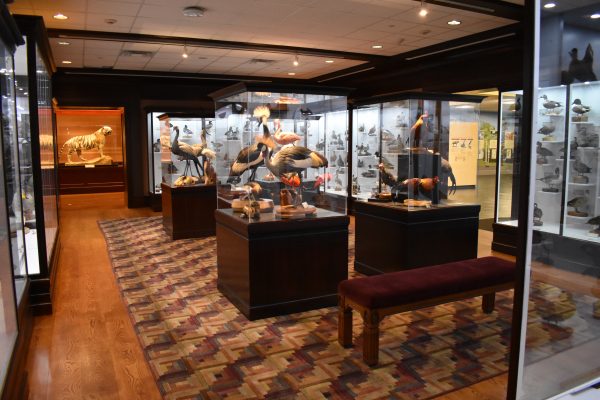


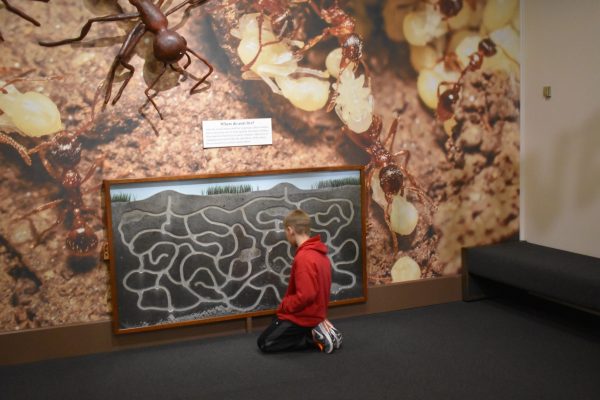
Also on the bottom floors is a is a small play area for the children with a cave to crawl in and slide. This was a very popular place to play. There are some hands-on activities, too, where the kids can move ants through their tunnels.

Upstairs
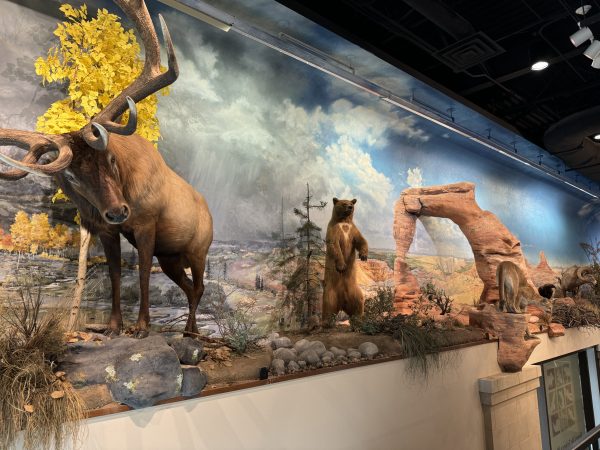
Once you head upstairs, you will see lots of animals posed in more active situations. Along the edge by the windows are all of the Utah animals. We always take our time checking this area out. The upstairs also houses rotating exhibits. The last time we visited there was one about the coronavirus, as well as one about how much energy it costs to produce food. Super interesting.

Basement
Most people don’t make it to the basement, and there aren’t as many large displays downstairs, but we love to visit because it focuses on our Utah animals and birds. There are two large hallways with cases displaying mostly birds, and a few animals that are found in Utah. We like looking for the ones that we have spotted on our adventures.
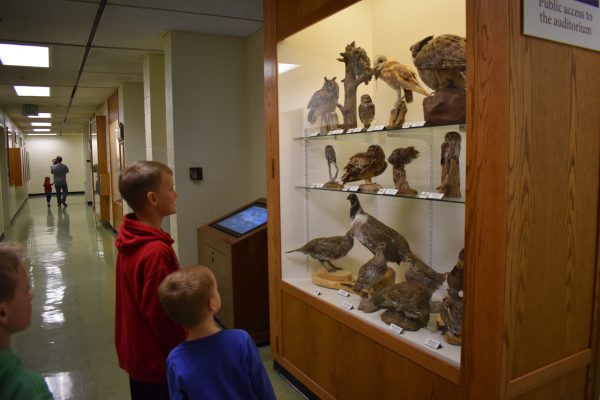
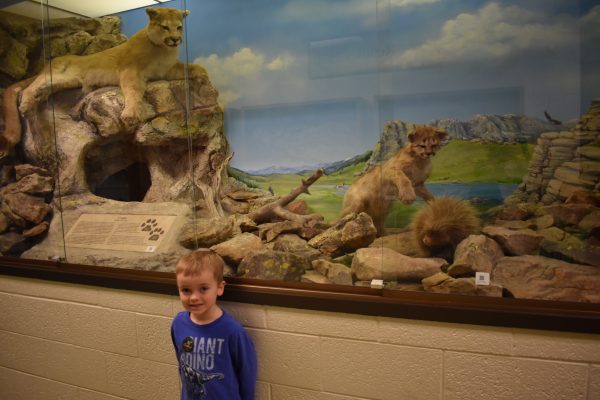
The building design is beautiful and we enjoy being in the Bean Museum. Make sure to grab a scavenger hunt near the front desk. They have them for all levels with pictures for young kids and more difficult ones for older kids. It always keeps our kids entertained.

Directions
The Bean Museum is located on BYU Campus and has FREE admission. To find the Bean Museum, turn on the road just south of the Marriot Center (Phillips Lane). Follow it to the end and head left on 1550 N. You will pass the Bean Museum on your left, then turn into the parking lot adjacent to the museum. Park here, but make sure to get a parking permit for the duration of your visit. You don’t want to deal with the BYU parking police.
The small BYU Creamery is right around the corner from the Bean Museum, or you can visit the Creamery on 9th. You can get some great ice cream after your visit. Or if you want to see some animals that are alive, drive to the other side of campus and check out the BYU Botany Pond.